EMU Infos
| dumper |
f205v, Caius
|
| date |
18/04/2006
|
| emulator |
MAME 0.119u1
|
| dev |
David Haywood
|
Technical references
CPUs
| QTY
|
Type
|
clock
|
position
|
function
|
| 1x |
MC68000P10 |
12MHz (24MHz/2) |
main PCB |
16/32-bit Microprocessor - main
|
| 1x |
Z8400BB1-Z80BCPU |
4MHz (8MHz/2) |
main PCB |
8-bit Microprocessor - sound
|
| 1x |
OKI M6295 |
1MHz, PIN 7 HIGH |
main PCB |
4-Channel Mixing ADCPM Voice Synthesis LSI - sound
|
| 1x |
LM324N |
|
main PCB |
Quad Operational Amplifier - sound
|
| 1x |
TDA2002 |
|
main PCB |
Audio Amplifier - sound
|
| 1x |
oscillator |
24.000MHz |
main PCB close to main CPU |
|
| 1x |
oscillator |
8.000MHz |
main PCB close to sound CPU |
|
ROMs
RAMs
PLDs
Others
1x 28x2 JAMMA edge connector
1x 12 legs connector (legs 2-5 are marked LE RI UP DO, legs 7-10 are marked SER SPE ROL ATT)
1x trimmer (volume)
2x 8x2 switches DIP
Notes
update 20170604: added pics, better description, confirmed redump
update 20170615 from Caius:
As stated in source, sound hardware is totally different from the original Sega System 18.Bootlegers used a single OKI MSM6295 PCM chip for both samples (stored on two device) and BGM (stored in four devices).Pin 7 of the OKI is high (tied to VCC). Clock on pin 5 of the OKI is @ 1 MHz. H-SYNC should be around 14.84 KHz but I'm not really sure, I can see board has some SYNC issue maybe due bad design.V-SYNC is measured @ 58.271 Hz (using an EL4583 SYNC separator with low-pass filter applied). Back to sound: it seems BGM is missing a track (at least music of first level).You can notice it by ourselves looking at this video I made and comparing it to a MAME or original PCB recording: https://www.youtube.com/watch?v=ZUOEtbNiTNk&feature=youtu.be I can't see any faults on PCB so I think this is a limit of the re-engineered sound hardware (like it happens for some CPS1 bootlegs). Maybe we can ascertain this if sound will be hooked up in emulation (currently it's missing). Lastly : there are three PLDs on PCB (one on CPU board, two on video board).All three are secured GAL16V8 and two of them are registered too. I was able to reproduce only two: a combinatorial and a registered with simple logic.The third is a registered one which use a strong feedback.
Files
409
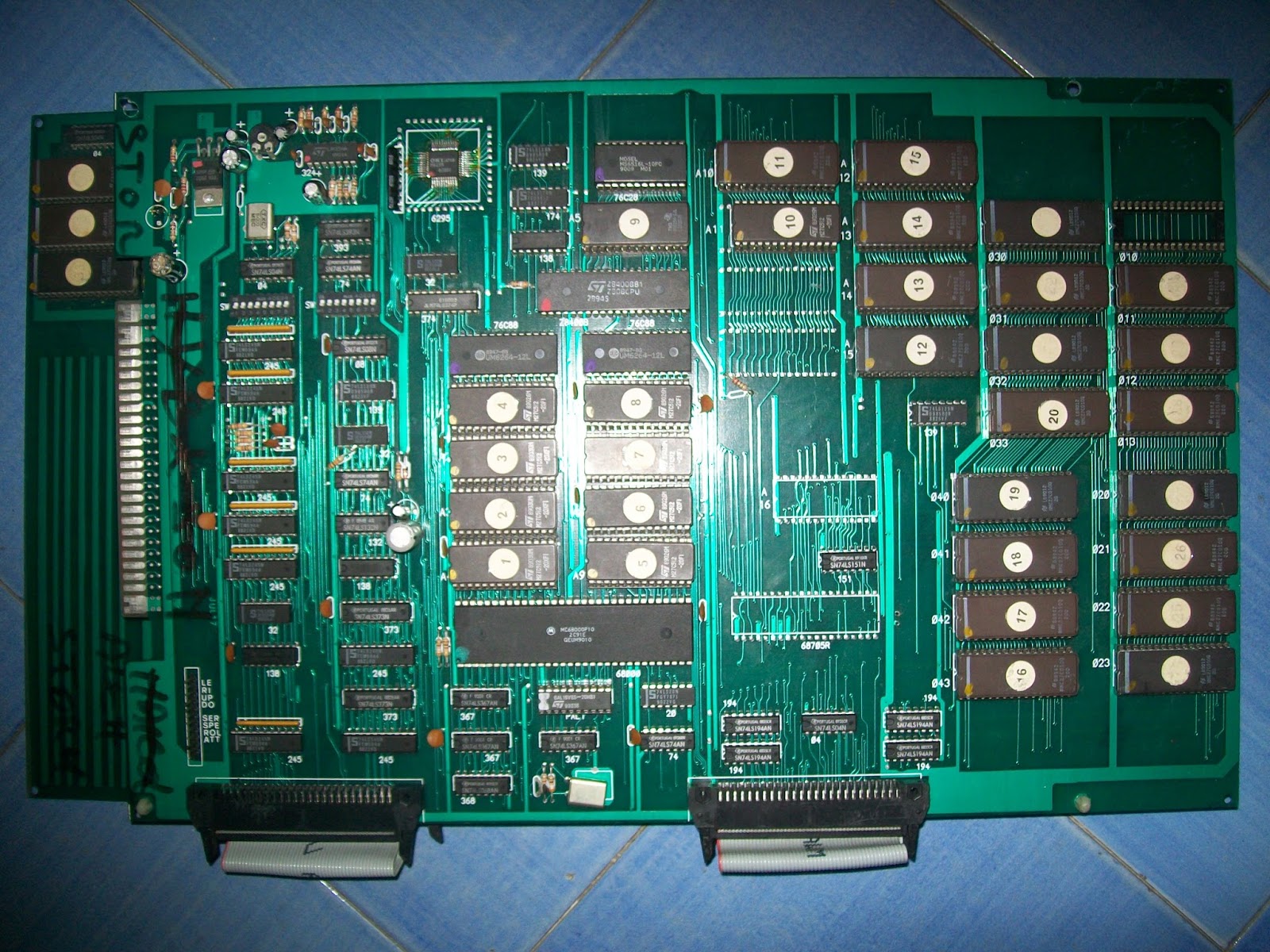 assembled PCBs
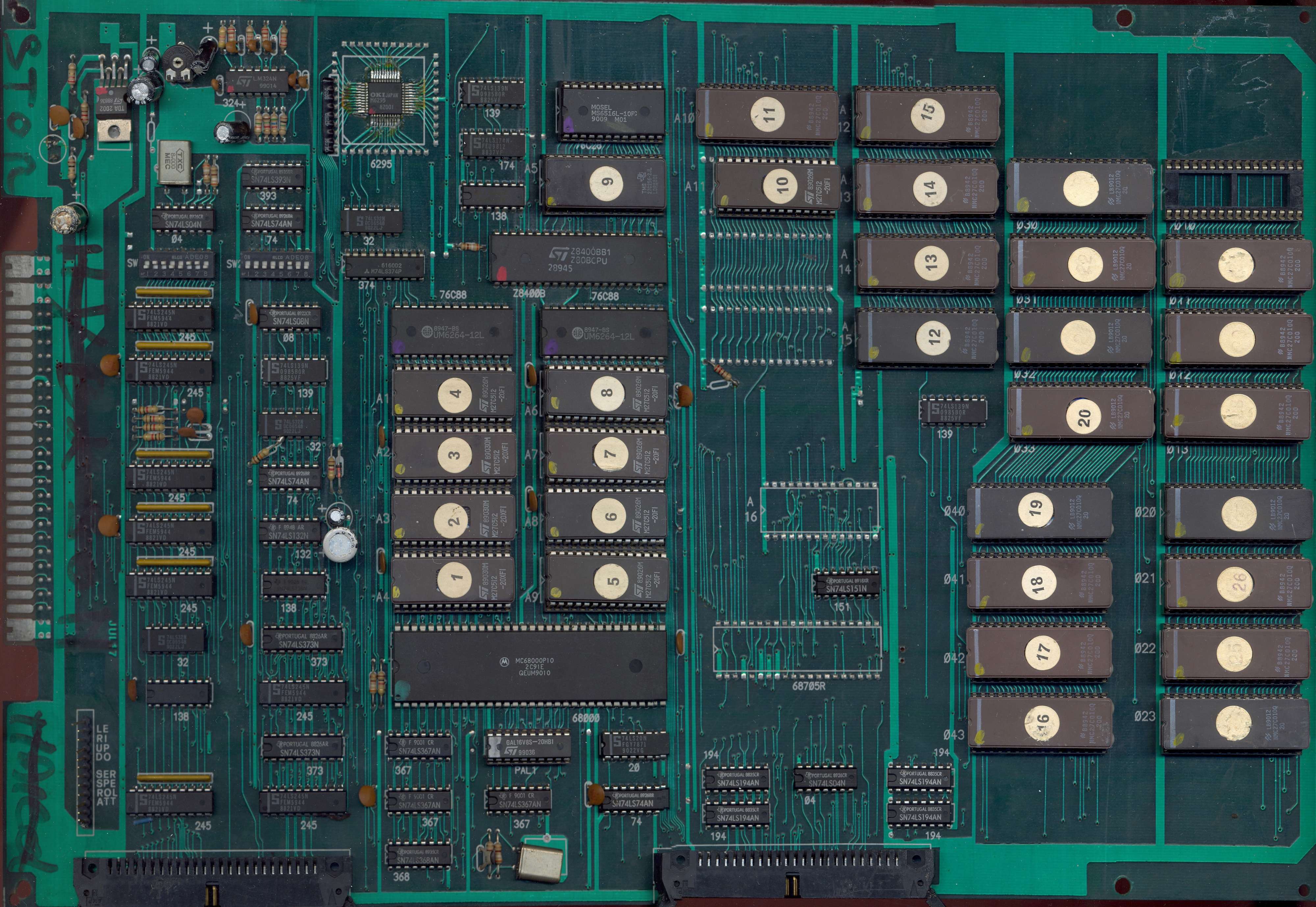 top PCB component side
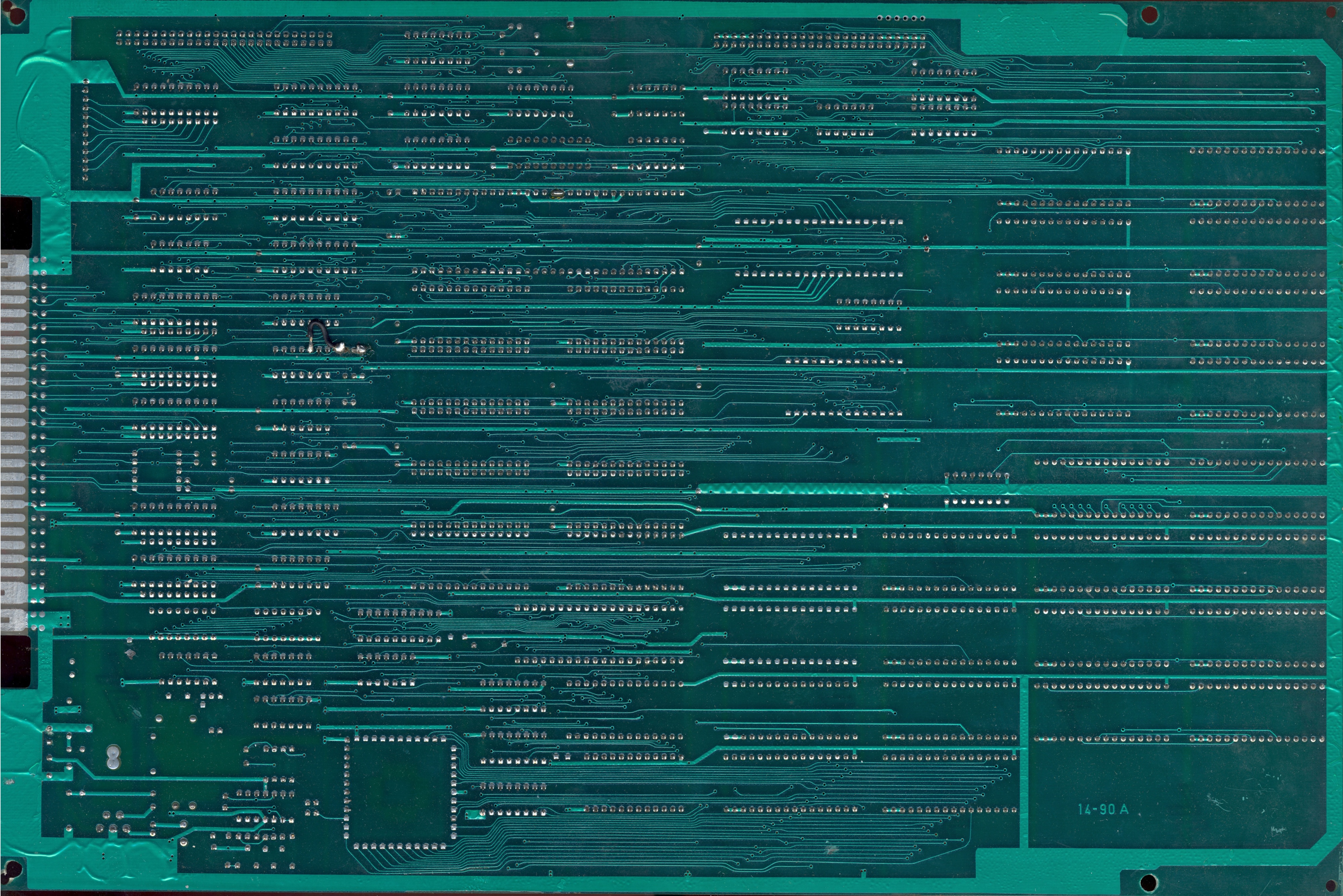 top PCB solder side
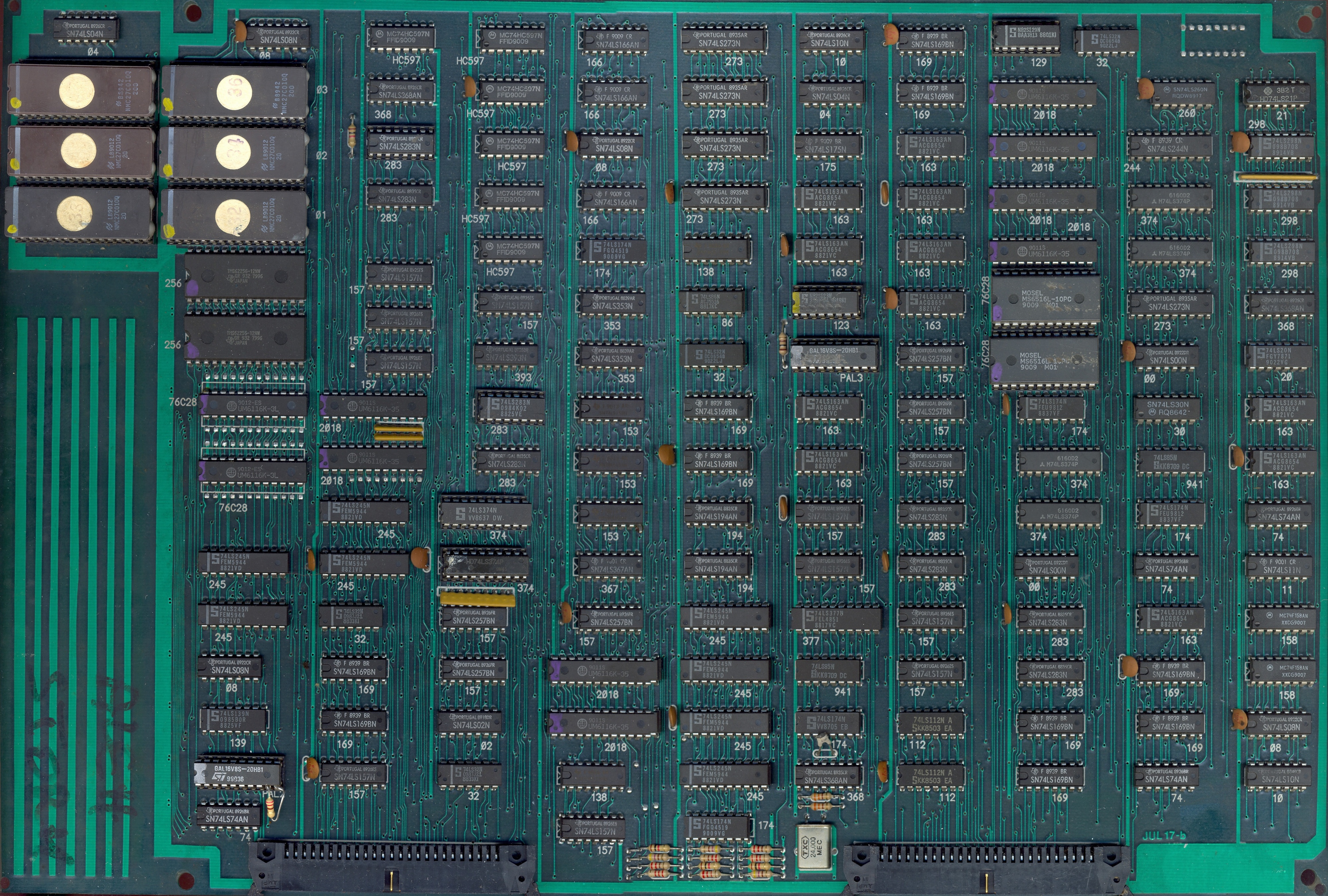 bottom PCB component side
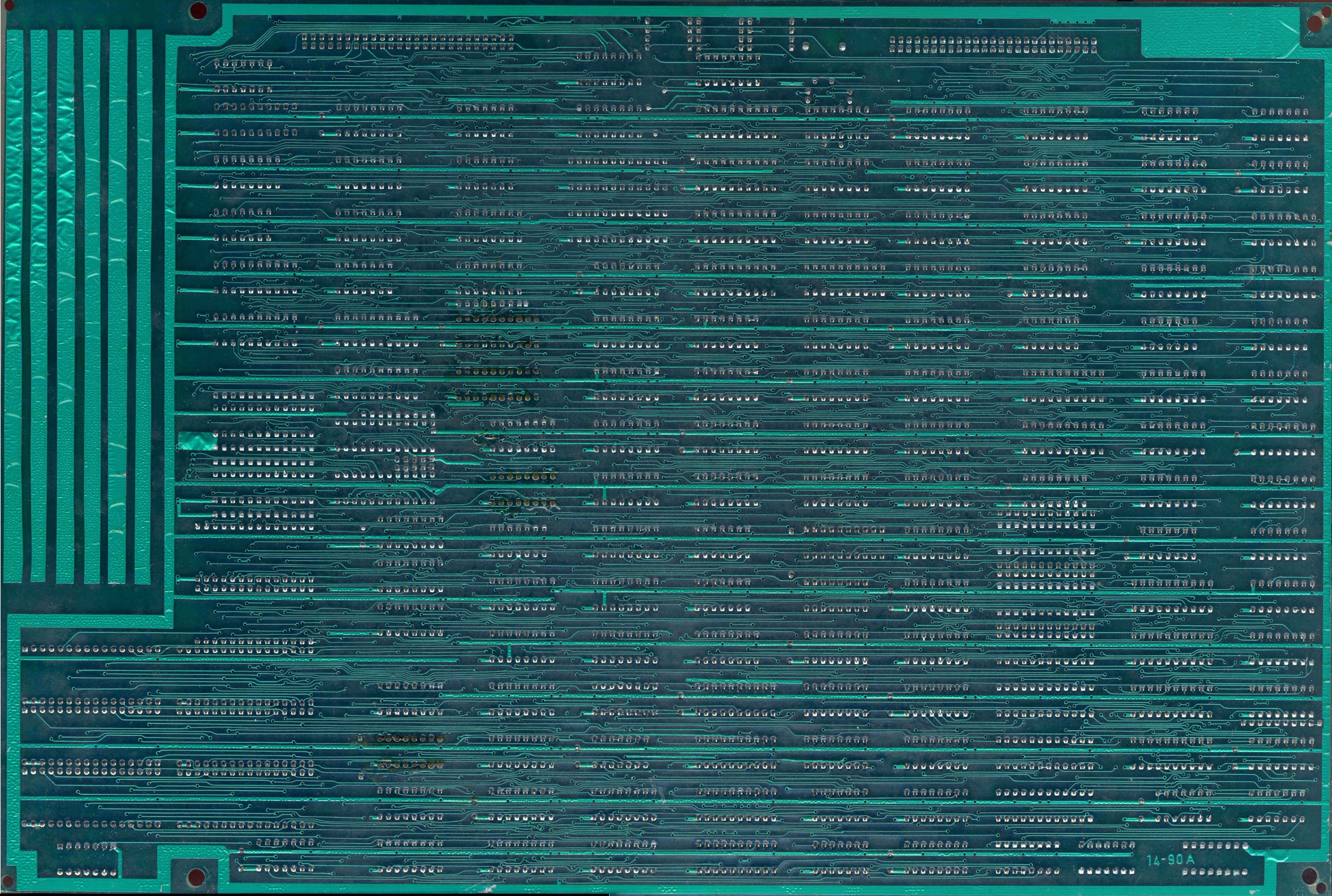 bottom PCB solder side
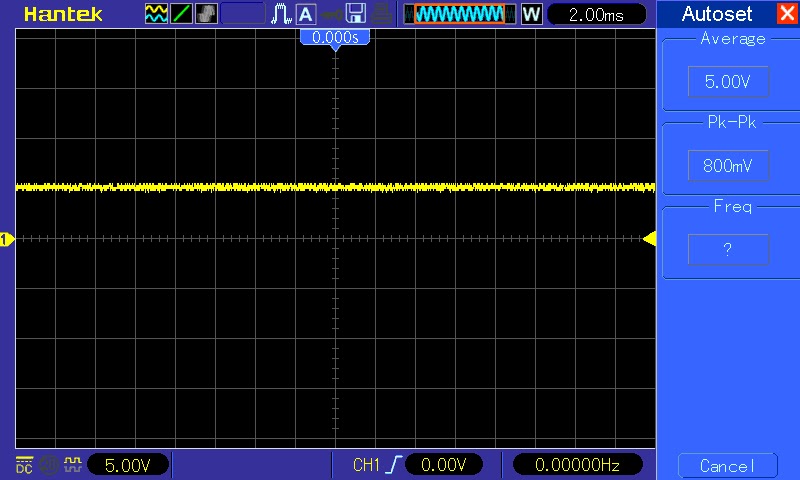 pin7 MSM6295
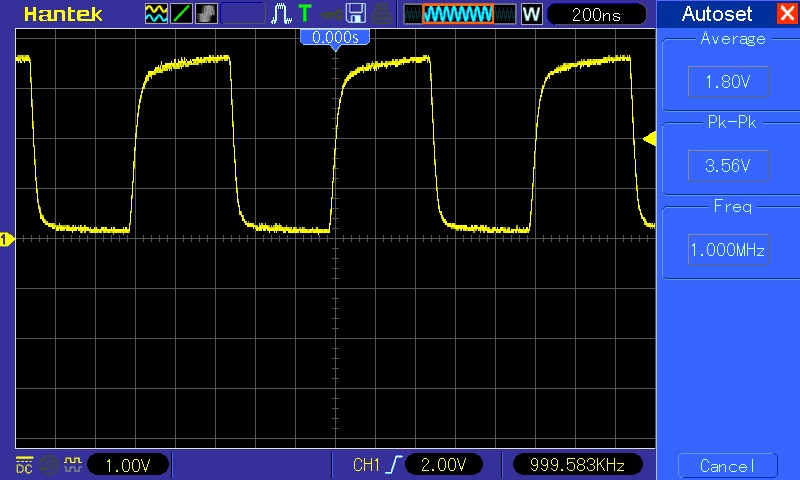 pin5 MSM6295 CLOCK
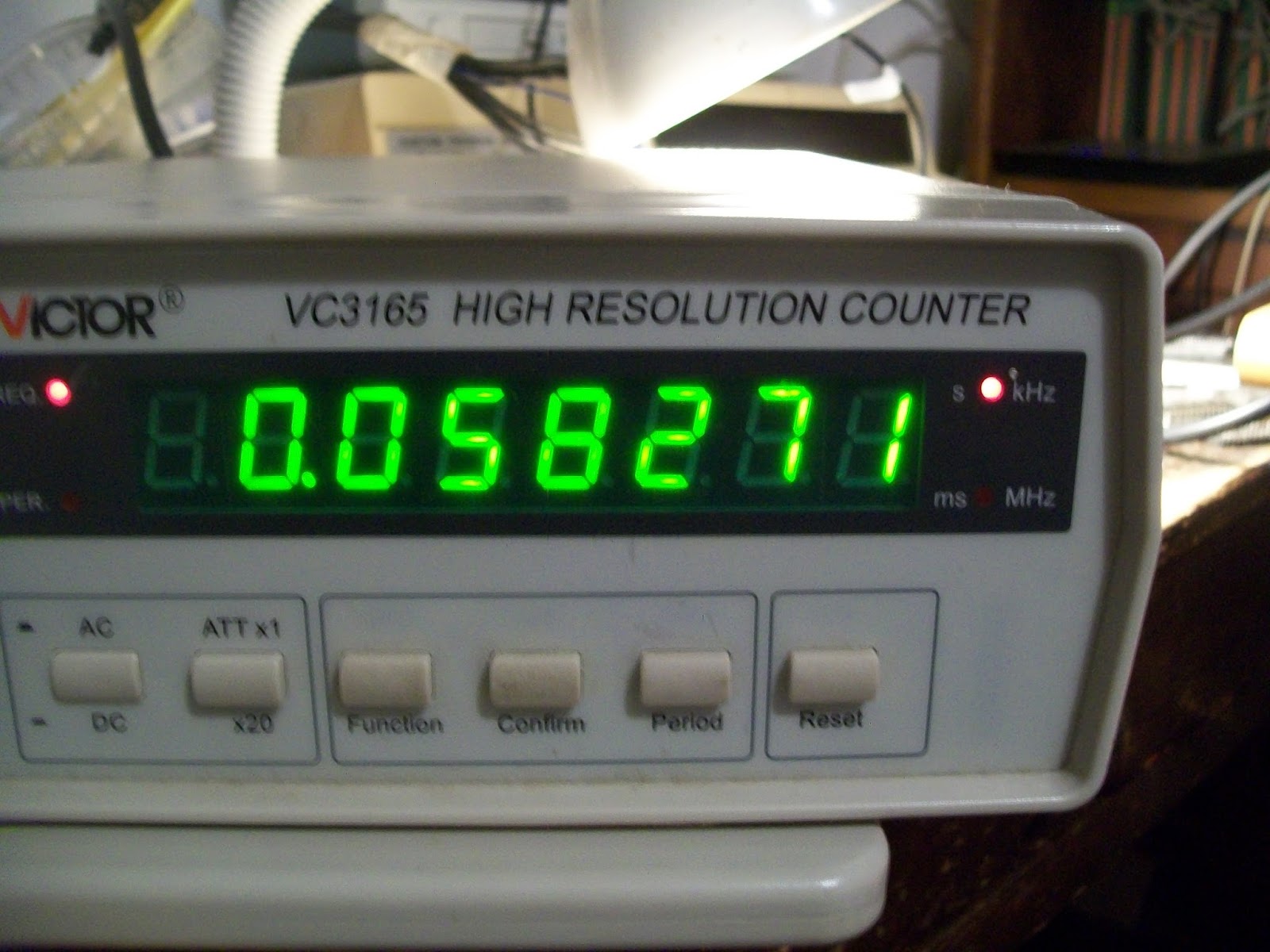 V-SYNC
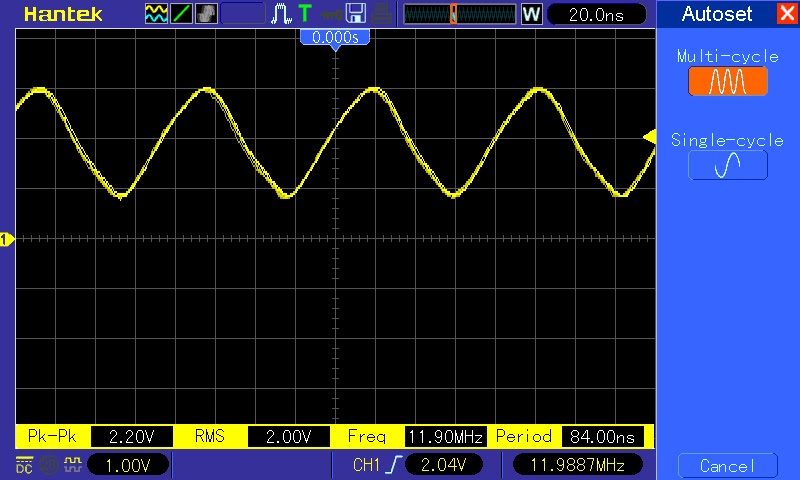 68000 CLOCK
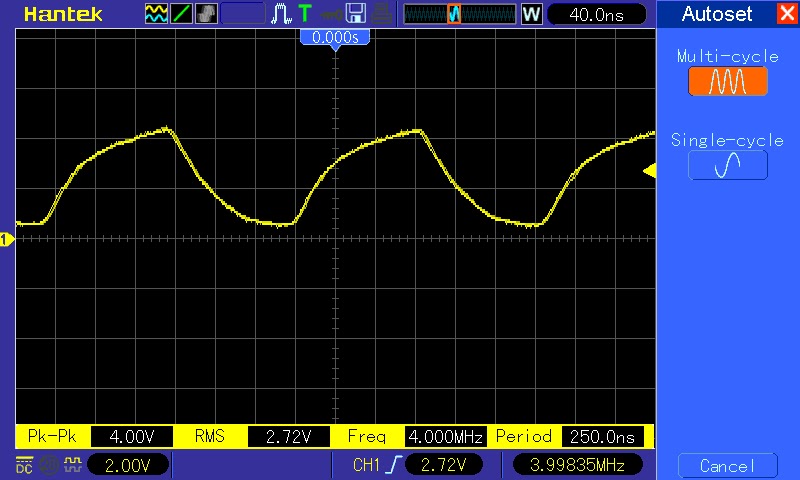 Z80 CLOCK


